A Beginner’s Morning at a Wetland Reserve
Wetlands can look quiet from the car park and surprisingly busy five minutes later. A few birds cross the water, something splashes in the reeds, and a distant group of waders seems to reorganize itself every time you look away. For a beginner, that abundance can feel like too much to identify. The easiest solution is not to learn faster, but to slow down.
Start with one patch of water and stay there for a while. A viewing platform or hide is useful because it gives you a fixed frame. Instead of scanning the entire reserve, notice where birds feed, where they rest, and which routes they repeat. Behaviour is often easier to remember than markings.
Keep the kit light
You do not need a specialist bag for a first visit. Comfortable shoes, water, a small notebook, and binoculars if you have them are enough. A phone can handle simple reference photos, but resist the urge to spend the whole morning zooming at distant shapes. The most interesting moments are often easier to understand with your eyes than on a screen.
If the reserve has a visitor board, take a quick look at recent sightings without turning them into a target list. Knowing that flamingos, herons, ducks, or raptors have been around can help you recognize possibilities, but the day is more enjoyable when an ordinary coot or sandpiper is allowed to be interesting too.
Watch first, name later
Try describing a bird before reaching for an identification guide. Is it feeding in shallow water or diving? Does it stand alone or stay close to a group? Is its flight direct, low, and fast, or does it circle above the reeds? Notes like these give you useful clues and train your attention in a way that memorizing names alone does not.
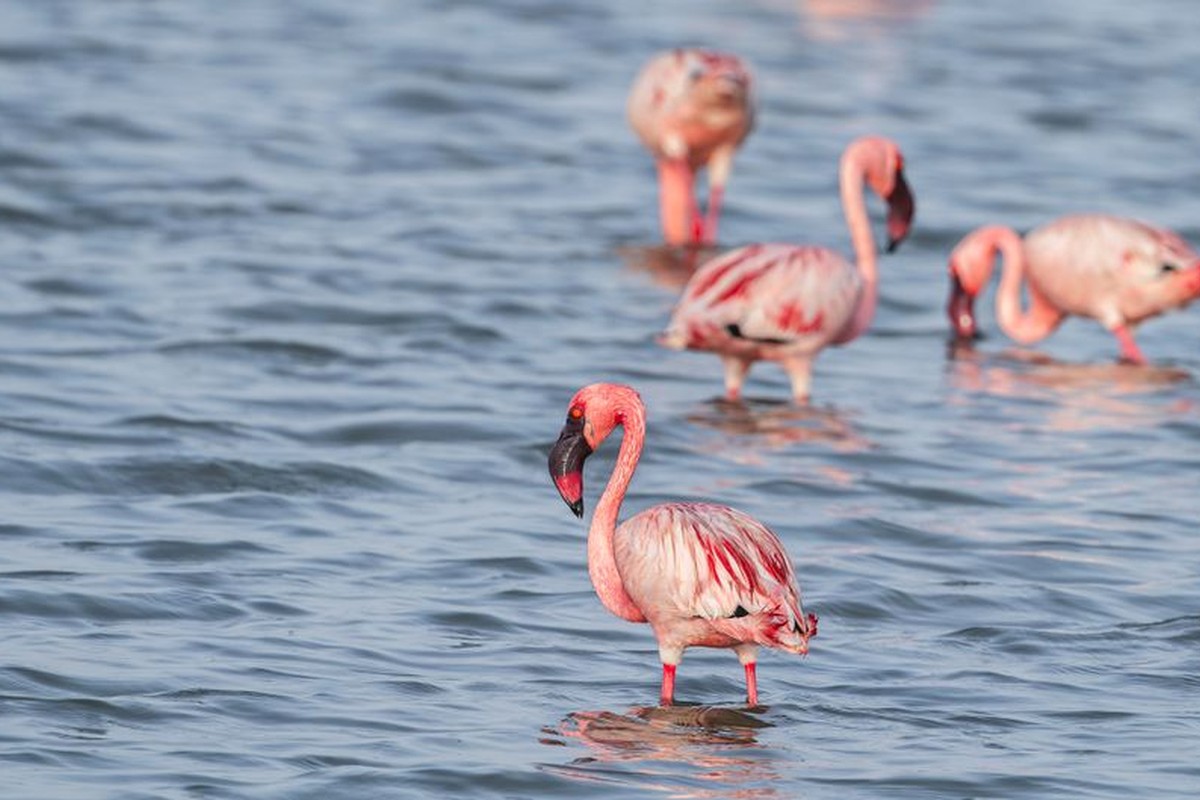
Large, social birds are especially good teachers. Flamingos, for example, make it easy to notice group movement, feeding posture, and the changing effect of light on plumage. Even from a distance, a flock can turn a flat stretch of water into a scene full of structure.
Give the place some quiet
Reserves work best when visitors become part of the background. Keep to marked paths, avoid sudden movement near resting birds, and use established viewing points. The goal is to observe natural behaviour, not to get close enough for a dramatic photograph.
That restraint changes the character of the morning. You begin to notice the reserve as a system rather than a collection of subjects: mud exposed as the waterline drops, insects hovering in sheltered corners, reeds bending differently where the wind reaches them, and birds shifting between feeding and resting areas.
A good first visit ends with questions
Before leaving, write down three things you noticed and one thing you could not identify. That final unknown is useful. It gives you something specific to look up later and a reason to return.
Birdwatching becomes rewarding when recognition grows gradually. The first morning does not need to produce a long list. If you leave knowing one call, one feeding habit, and one place where you would like to sit again, the wetland has already started to become familiar.